Our friend, herbalist-wizard Rowan Hamilton, with the first in a series of videos about superb skin care using ingredients from the market and the garden:
Monday, July 09, 2007


Thursday, June 07, 2007
bee people

Dear Human Cousins,
You worry we may be disappearing.
You wonder if we've died, become lost or run away.
We give thanks you wonder! We like it when you Human People wonder.
Please wonder!...about our lives, our days, our ways of flying out and all the way home on any available breeze; our yellow pollen fuzz leggings and blur of glascene wings; our ancient intimacy with blossoms; the precise hexagonal wax of our edible hives; the amazing, thick, sweet medicinal translucence of honey; our dance vibrations languages and questioning antennas, our irresistably magnetizing queen, and faithful tender attentions to each of our precious jewel-like sleeping unborn; our reason for being bees.
Please wonder!...what is flight like in a tangle of satellite signals, cell phone fequencies, exhaust and high voltage wires? What does Life feel like without Her, without Them? What meaning can be made from the taste of sugar water and 'pollen substitute'? Can we be shipped by the thousands, thousands of miles in the chaos and din of metal eighteen wheelers? How many times can we land on the open petals of ancestrally welcoming flowers to find the heart we enter sprayed or engineered hostile?
Wonder Human Cousins, could you live like this? Released, would you come back?
with Respect and Love to our Human Cousins,
Bee People
You worry we may be disappearing.
You wonder if we've died, become lost or run away.
We give thanks you wonder! We like it when you Human People wonder.
Please wonder!...about our lives, our days, our ways of flying out and all the way home on any available breeze; our yellow pollen fuzz leggings and blur of glascene wings; our ancient intimacy with blossoms; the precise hexagonal wax of our edible hives; the amazing, thick, sweet medicinal translucence of honey; our dance vibrations languages and questioning antennas, our irresistably magnetizing queen, and faithful tender attentions to each of our precious jewel-like sleeping unborn; our reason for being bees.
Please wonder!...what is flight like in a tangle of satellite signals, cell phone fequencies, exhaust and high voltage wires? What does Life feel like without Her, without Them? What meaning can be made from the taste of sugar water and 'pollen substitute'? Can we be shipped by the thousands, thousands of miles in the chaos and din of metal eighteen wheelers? How many times can we land on the open petals of ancestrally welcoming flowers to find the heart we enter sprayed or engineered hostile?
Wonder Human Cousins, could you live like this? Released, would you come back?
with Respect and Love to our Human Cousins,
Bee People
Bumblebee on bramble, originally uploaded by SouthbankSteve.
Crossposted from Life Cultivating Life.
Monday, April 09, 2007
Step It Up 2007: National Day of Climate Action
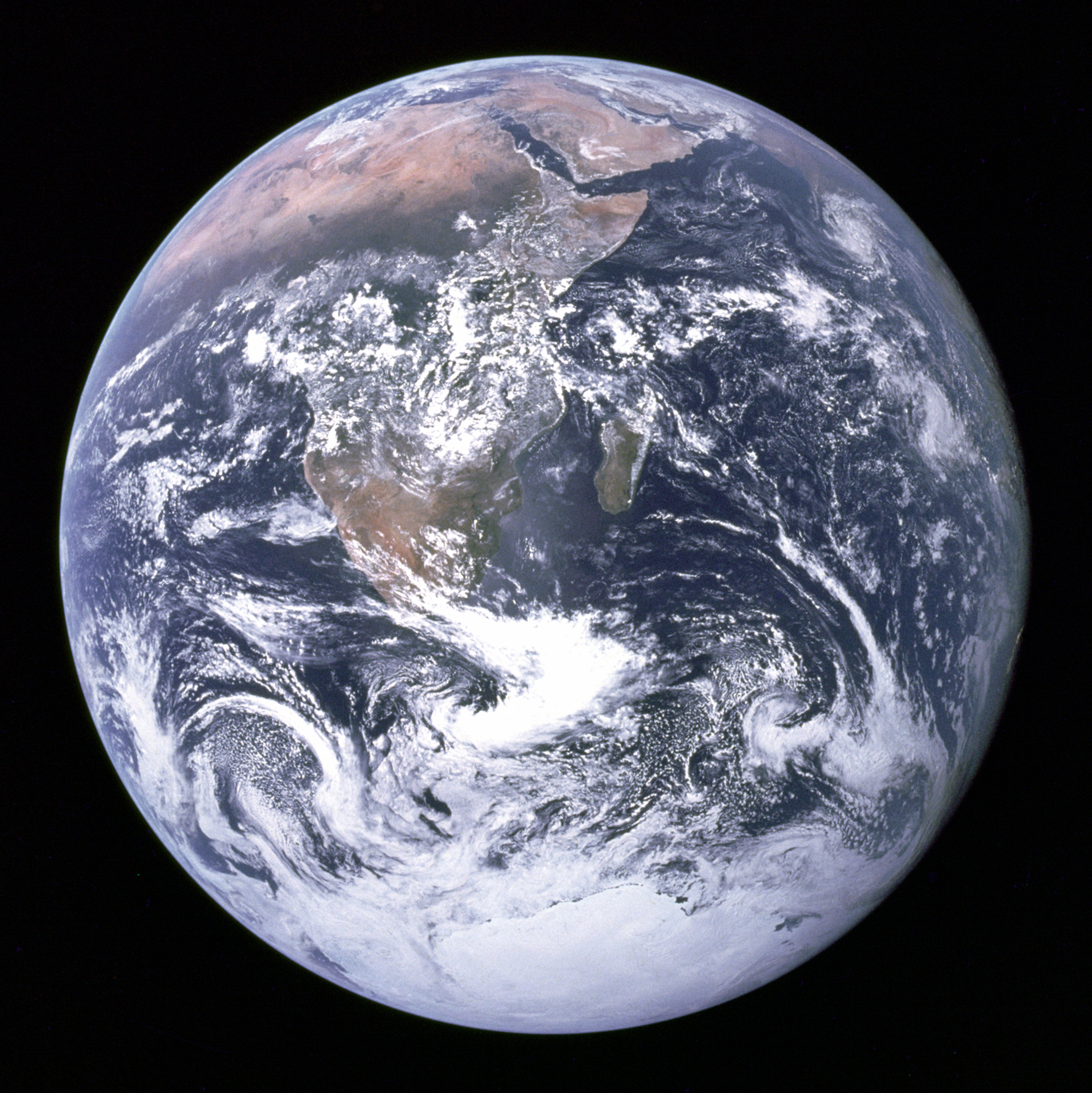 April 14, 2007, is "National Day of Climate Action." Serving as the organizing hub is Step It Up 2007, a grassroots group which has used email, word of mouth, and online networking (plus a write-up in Business Week, and an endorsement by Al Gore) to inspire and invite gatherings, actions and rallies of all kinds, in order to send the message to Congress to "Step it up -- cut carbon emissions 80% by 2050."
The Step It Up 2007 team writes,
"As a truly global crisis, global warming will impact everyone. However, the impact will be felt greatest among the most vulnerable of the world’s population. While global warming presents us with our most pressing challenge, it also presents our most inspiring opportunity. We have an opportunity and a responsibility to ensure that our solutions to this crisis take these populations into account."
So far there are over 1300 rallies and actions being planned by local volunteers, with at least one in every state, and people adding new ones to the list every day. There are going to be over a dozen in Seattle alone, including "The Marching Forest of Shoreline" ("Calling all aspiring trees, squirrels, mushrooms, suns, streams, hills, bunnies, bushes, butterflies, birds, bees, fish, flowers and bad English Ivy! We invite you, even if you don't live in Shoreline, to join our carbon-offsetting forest to help raise awareness about the global warming crisis"), a Solutions Fair, a couple of actions to mark how far the waters will rise if the polar ice caps melt into the sea, and a march between Occidental Park in Pioneer Square through downtown to a rally at Myrtle Edwards Park (across the street from Seattle icon the Pike Place Market).
Please join us! (even if you don't dress up like a squirrel, or bad English ivy!)
Thursday, April 05, 2007
Yoga Class Series 4/8 - 4/29
Dr. Marcie Hamrick is offering a series of gentle viniyoga classes here at the Seattle Healing Arts Center beginning on Sunday April 4, from 4 - 5:30pm. Please phone (206) 363-5555 to register or for more information.
Wednesday, April 04, 2007
More Fruit and Veg

A nice little article on 10 secrets to eating enough fruit and veggies:
To maximize your intake of health-enhancing nutrients like vitamin C, carotenoids (beta-carotene, lycopene, lutein, zeaxanthin), folate, potassium, fibre, and antioxidant-rich plant compounds like flavonoids, you need to reach for at least seven, ideally closer to 10, servings of fruits and vegetables each day. One serving consists of:
• 1 medium-size fruit or vegetable (an apple, orange, carrot or pear)
• 1/2 cup (125 mL) raw, cooked or frozen fruit or vegetable (a scoop of cooked peas or a small bowl of sliced peaches)
• 1/2 cup (125 mL) juice (a small glass of orange or tomato juice)
• 1 cup (250 mL) salad (a small side salad)
• 1/4 cup (60 mL) dried fruit (a medium-size handful of raisins)
For those of you who think this sounds like a truckload of fruits and vegetables, let me assure you it's only a wheelbarrow full (just kidding!). It's easier than you think:"
go read the rest!
(thank you for the pointer, Curt)
• 1 medium-size fruit or vegetable (an apple, orange, carrot or pear)
• 1/2 cup (125 mL) raw, cooked or frozen fruit or vegetable (a scoop of cooked peas or a small bowl of sliced peaches)
• 1/2 cup (125 mL) juice (a small glass of orange or tomato juice)
• 1 cup (250 mL) salad (a small side salad)
• 1/4 cup (60 mL) dried fruit (a medium-size handful of raisins)
For those of you who think this sounds like a truckload of fruits and vegetables, let me assure you it's only a wheelbarrow full (just kidding!). It's easier than you think:"
go read the rest!
(thank you for the pointer, Curt)
| | |
 |
Thursday, February 15, 2007
People are Each Others' Medicine
 Another modality in medicine, and one that is particularly important in naturopathic medicine, is the human modality itself. I refer to this as the application of “people and organizations” to the patient. Giving the patient people, or groups of people, contains within itself a healing power. This may seem obvious to us, but we seldom prescribe people as a medicine or modality. In the practice of naturopathic medicine, as I view it, I often refer patients to a yoga class, not only for the exercise, a well recognized modality, but for the interaction of the patient to people who are also seeking wellness. People are each others’ medicine in the ideal world.
- William A. Mitchell, ND (1947 - 2007, one of the three co-founders of Bastyr University, the preeminent natural health sciences institution in the country. Remembrances of Dr. Mitchell are being posted here)
Monday, November 13, 2006
Relational Medicine I
Relationship-Centered Care (RCC) was an area of exploration cultivated by the Fetzer Institute a few years ago (they also sponsored the seeds for the Collective Wisdom Initiative, and currently are devoted to "fostering awareness of the power of love and forgiveness"). The specific kinds of relationships mentioned were those between patient & practitioner, practitioner & practitioner, practitioner & community, and self-awareness.
At our office we also consider another expression of healing human interaction: the relationship between our patients and our staff. When we are short-staffed, Dr. Gail, one of our practitioners and our de facto practice manager, adds some of the reception staff duties on to her medical practice responsibilities (thank you, Gail!!).
Her reports back to the rest of the practitioners are always eye-opening--how differently she is regarded and spoken to when she is perceived as a receptionist, than when she is perceived as a physician. Although many, most, of our patients have friendly, courteous, even affectionate relationships with our staff members, a small proportion of our wonderful patients can be rude, and even mean, to our receptionists, billing staff, and medical assistants. It's not just that folks are in pain, I don't think--even people who have very warm and mutually respectful long-term relationships with their practitioners sometimes behave disrespectfully to the rest of the staff. Our office is not so unusual--the position of receptionist in a medical office is always considered to be very challenging and stressful work, and to find people who are willing to do it for many years is rare.
What do you think?
I am always surprised to hear these stories. I'm reminded of the years I spent waiting tables while in college. My experience then was that sometimes we treat those whose work is service less like fellow human beings and more like...well, like servants, whom we expect to give us what we want whether it's possible or not.
Our goal and intention is to cultivate an atmosphere and a culture where our support staffers feel that they are supported too, and where mutual respect is part of every relationship. Our current staff people deeply understand that their interactions with patients are opportunities, often the first opportunity our group has, to offer compassion, care and healing.
At our office we also consider another expression of healing human interaction: the relationship between our patients and our staff. When we are short-staffed, Dr. Gail, one of our practitioners and our de facto practice manager, adds some of the reception staff duties on to her medical practice responsibilities (thank you, Gail!!).
Her reports back to the rest of the practitioners are always eye-opening--how differently she is regarded and spoken to when she is perceived as a receptionist, than when she is perceived as a physician. Although many, most, of our patients have friendly, courteous, even affectionate relationships with our staff members, a small proportion of our wonderful patients can be rude, and even mean, to our receptionists, billing staff, and medical assistants. It's not just that folks are in pain, I don't think--even people who have very warm and mutually respectful long-term relationships with their practitioners sometimes behave disrespectfully to the rest of the staff. Our office is not so unusual--the position of receptionist in a medical office is always considered to be very challenging and stressful work, and to find people who are willing to do it for many years is rare.
What do you think?
I am always surprised to hear these stories. I'm reminded of the years I spent waiting tables while in college. My experience then was that sometimes we treat those whose work is service less like fellow human beings and more like...well, like servants, whom we expect to give us what we want whether it's possible or not.
Our goal and intention is to cultivate an atmosphere and a culture where our support staffers feel that they are supported too, and where mutual respect is part of every relationship. Our current staff people deeply understand that their interactions with patients are opportunities, often the first opportunity our group has, to offer compassion, care and healing.
Subscribe to:
Posts (Atom)
