Thursday, February 15, 2007

People are Each Others' Medicine

Another modality in medicine, and one that is particularly important in naturopathic medicine, is the human modality itself. I refer to this as the application of “people and organizations” to the patient. Giving the patient people, or groups of people, contains within itself a healing power. This may seem obvious to us, but we seldom prescribe people as a medicine or modality. In the practice of naturopathic medicine, as I view it, I often refer patients to a yoga class, not only for the exercise, a well recognized modality, but for the interaction of the patient to people who are also seeking wellness. People are each others’ medicine in the ideal world.
- William A. Mitchell, ND (1947 - 2007, one of the three co-founders of Bastyr University, the preeminent natural health sciences institution in the country. Remembrances of Dr. Mitchell are being posted here)

Monday, November 13, 2006

Relational Medicine I

Relationship-Centered Care (RCC) was an area of exploration cultivated by the Fetzer Institute a few years ago (they also sponsored the seeds for the Collective Wisdom Initiative, and currently are devoted to "fostering awareness of the power of love and forgiveness"). The specific kinds of relationships mentioned were those between patient & practitioner, practitioner & practitioner, practitioner & community, and self-awareness.

At our office we also consider another expression of healing human interaction: the relationship between our patients and our staff. When we are short-staffed, Dr. Gail, one of our practitioners and our de facto practice manager, adds some of the reception staff duties on to her medical practice responsibilities (thank you, Gail!!).

Her reports back to the rest of the practitioners are always eye-opening--how differently she is regarded and spoken to when she is perceived as a receptionist, than when she is perceived as a physician. Although many, most, of our patients have friendly, courteous, even affectionate relationships with our staff members, a small proportion of our wonderful patients can be rude, and even mean, to our receptionists, billing staff, and medical assistants.
It's not just that folks are in pain, I don't think--even people who have very warm and mutually respectful long-term relationships with their practitioners sometimes behave disrespectfully to the rest of the staff. Our office is not so unusual--the position of receptionist in a medical office is always considered to be very challenging and stressful work, and to find people who are willing to do it for many years is rare.

What do you think?

I am always surprised to hear these stories. I'm reminded of the years I spent waiting tables while in college. My experience then was that sometimes we treat those whose work is service less like fellow human beings and more like...well, like servants, whom we expect to give us what we want whether it's possible or not.


Our goal and intention is to cultivate an atmosphere and a culture where our support staffers feel that they are supported too, and where mutual respect is part of every relationship. Our current staff people deeply understand that their interactions with patients are opportunities, often the first opportunity our group has, to offer compassion, care and healing.

Saturday, November 04, 2006

Worldchanging.com Book

An important concept in public health, which has been embraced and elaborated upon by naturopathic medicine, is that of the Determinants of Health. I prefer the Buddhist-influenced phrase "interdependent co-arising conditions of health," but the idea is the same: all of those non-medicine factors that influence and contribute to our health and to the health of the community.

The basic categories are Inborn factors; Traumas, Exposures and Stresses; and Lifestyle factors. They include genetic predispositions; pre-natal exposures and nutrition; environmental exposures to pollutants, toxins and infectious agents; nutritional status; socio-economic circumstances; access to health care; access to shelter and unadulterated food and clean air and water; exercise.

I think of these conditions as the soil from which the sprouts and trunks of our individual vessels, our individual lives, emerge from the shared ground. As whole-person, whole-planet health care practitioners, we also pay attention to soil-level conditions that nourish our vitality and well-being such as individual restorative practices (rest, and enough sleep, and silence, and relaxation), meaningful work, love and friendship and feeling of belonging, access to sources of beauty and joy. The list is very long (maybe infinite!)

We also necessarily pay attention to those conditions upon which we have only partial influence as individuals, those aspects that we can really only influence by working together at the community (or bigger) level. Conditions which might not on first glance appear to be health concerns.

But clearly, when great numbers of people in a neighborhood or village or city die or are rendered homeless because of extreme weather conditions combined with unwise building practices and overpopulation, we can see that the climate crisis is a public health, and whole-planet health, crisis. The widening gap between the wealthy and the deeply impoverished turns out to be a situation that strongly impacts the health and wellness of everyone. War and political repression are powerfully destructive influences on health, and in our increasingly globally interconnected world, those influences will affect us all directly or indirectly.

There have been many--sometimes entirely opposite--ways of interpreting the causes of these conditions and strategies for addressing them. The perspectives that make the most sense to us are those that take a broadly interconnected systemic view, and we'll be offering resources here that come from that perspective.
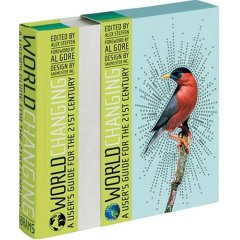
Beginning here: from Worldchanging.com, a wonderful on-line resources, comes their first book.
"Worldchanging: A Users Guide for the 21st Century is a groundbreakiung compendium of the most innovative solutions, ideas and inventions emerging today for building a sustainable, livable, prosperous future.
From consumer consciousness to a new vision for industry; non-toxic homes to refugee shelters; microfinance to effective philanthropy; socially responsible investing to starting a green business; citizen media to human rights; ecological economics to climate change, this is the most comprehensive, cutting-edge overview to date of what's possible in the near future -- if we decide to make it so."
You are welcome to come take a look at the copy in our reception room next time you visit us--but since it's over 600 pages long, you might want to plan on coming early!

Wednesday, November 01, 2006

Happy All Saints' Day


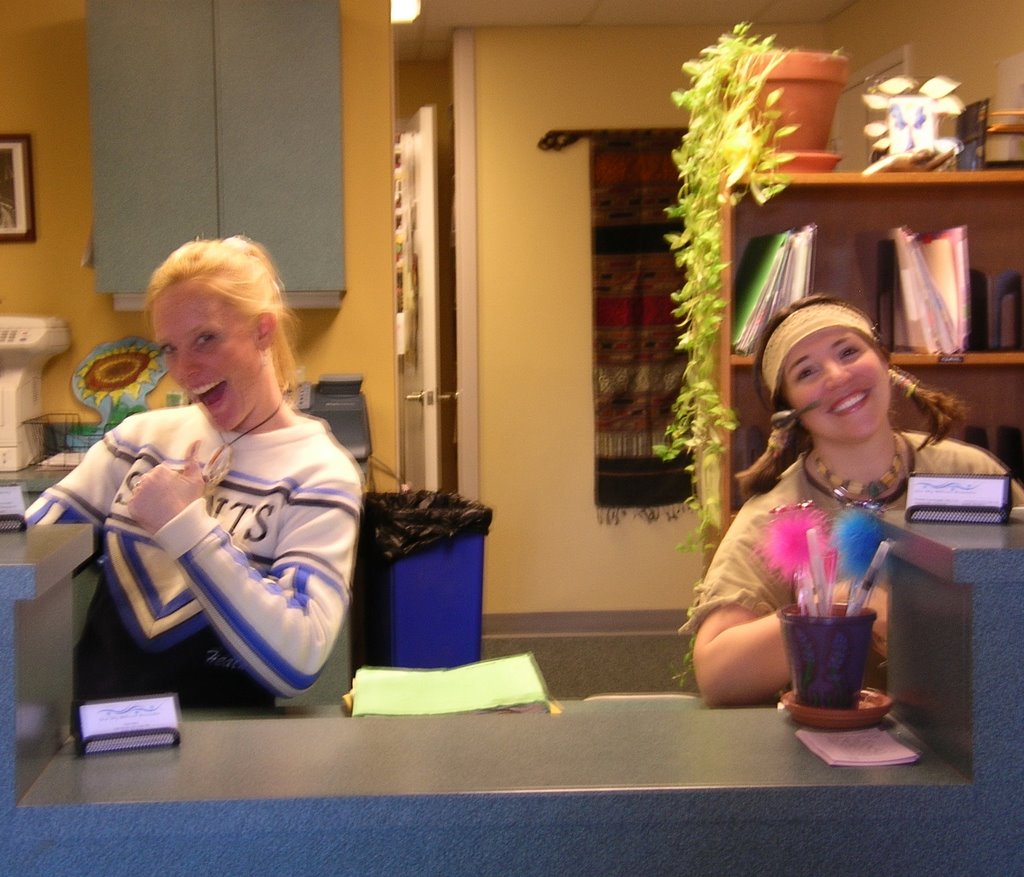
(you can't tell from this photo, but Heather's sweater says "SAINTS")
Playfulness and delight = important determinants of health


Monday, October 16, 2006

birds

that the birds of worry and care
fly above your head
this you cannot help
but that they build nests in your hair
this you can prevent
photo originally uploaded by ehoyer

Sunday, October 15, 2006

New Sky


We have a new website to go along with this weblog!

Our deep appreciation to my friend Jana Mochkatel and her team at Net-Time, who designed and developed our logo and site.

Our great appreciation, too, to Fred First of Fragments from Floyd, who so generously gave us permission to use his gorgeous photo, Transparent Green of Spring (above, and see it enlarged here, and in context, here)

We began our medical and health care practice a little over 6 years ago, as a not-for-profit called One Sky Medicine (which we now call "Old Sky"). In our idealism and naivete we made numerous excessively expensive business choices that compounded over time, and by the end of 2004 we decided to acknowledge all the good intentions, hard work, tremendous struggle and tremendous contributions by so many (hundreds of) people (staff, administrators, board members, colleagues, our wonderful patients and community supporters) and to ask the board to cut our losses and go out of business.

A seed group of practitioners, our bonds forged in that kind of heat that comes from hours and months and years of working together, playing and eating (a lot) together, living through difficulty, and becoming like family to one another, decided after long discussions that we would stay in business together. Our form now is of independent practices joined in partnership, our overhead is much less than half of what it was, we are steadily paying back the debts, and most of our patients came along with us when we moved. We're grateful to all that has sustained us and brought us this far. It feels as if our transplanted roots have had a chance over the past 18 months to settle in and grow, and so now we have more energy to reach from the inside out and extend our tender stems and leaves into the wider world.

cross-posted to life cultivating life

Friday, October 13, 2006

Health Care for All

A brief excerpt from the Fall 2006 issue of YES! magazine, a large portion of which is devoted to the theme of "American Health Care. A System to Die For?":

(selections from) Principles of Real Solutions
--by Sarah van Gelder, Executive Editor

Cover everyone.
  • Health care is a public good. Like fire or police protection, universal coverage benefits each one of us and society as a whole. Unlike consumer choices, we don't know when we--or a loved one--may need expensive treatment.
De-link coverage from jobs.
  • Employer-based insurance hurts entrepreneurs and independent workers, the self-employed, the unemployed, part-time workers, free-lancers, artists, and the working poor.
Control costs by cutting bureaucracy.
  • Enormous savings are available simply by freeing doctors from the burdensome paperwork required by insurance companies. Negotiated fee structures and a single payer--or a few regulated payers--would save enough to cover the uninsured, studies show (see page 22 of the magazine)
Invest in prevention.
  • We should suppport healthy habits through treatment of substance-abuse, smoking and domestic violence. Open space, bike trails, and community gardens improve health, too, and we should reduce the toxins that contaminate our food, water, air and soils.
Reduce poverty and inequality.
  • Poverty, powerlessness, and inequality damage the health of the entire society, and each one of us, rich and poor (see page 29 of the magazine, and here). A huge health dividend would result simply by reducing excessive CEO salaries and profits, and raising up those at the bottom of the income scale. We could start with the health care sector.
If you are interested in YES! magazine--which is ad-free, and printed on 100% post-consumer waste recycled paper, and always full to the brim with thoughtful articles and useful information--you can get a free copy, and if you are a schoolteacher you can get a free one-year subscription.